- Telephone
- Email

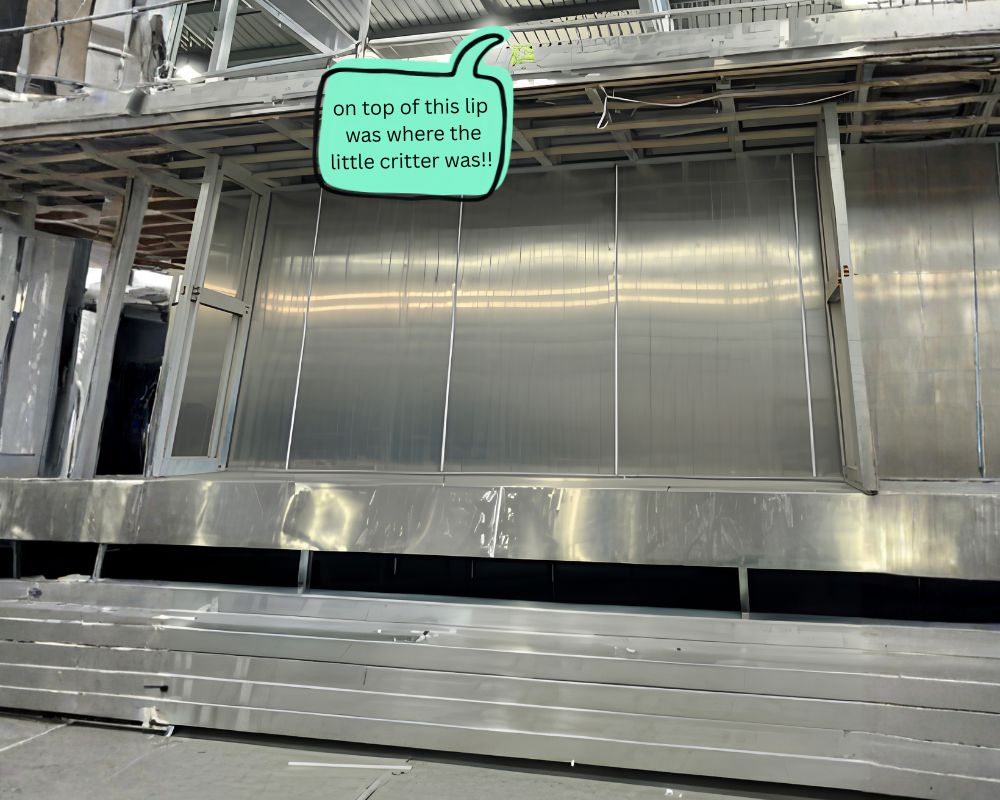
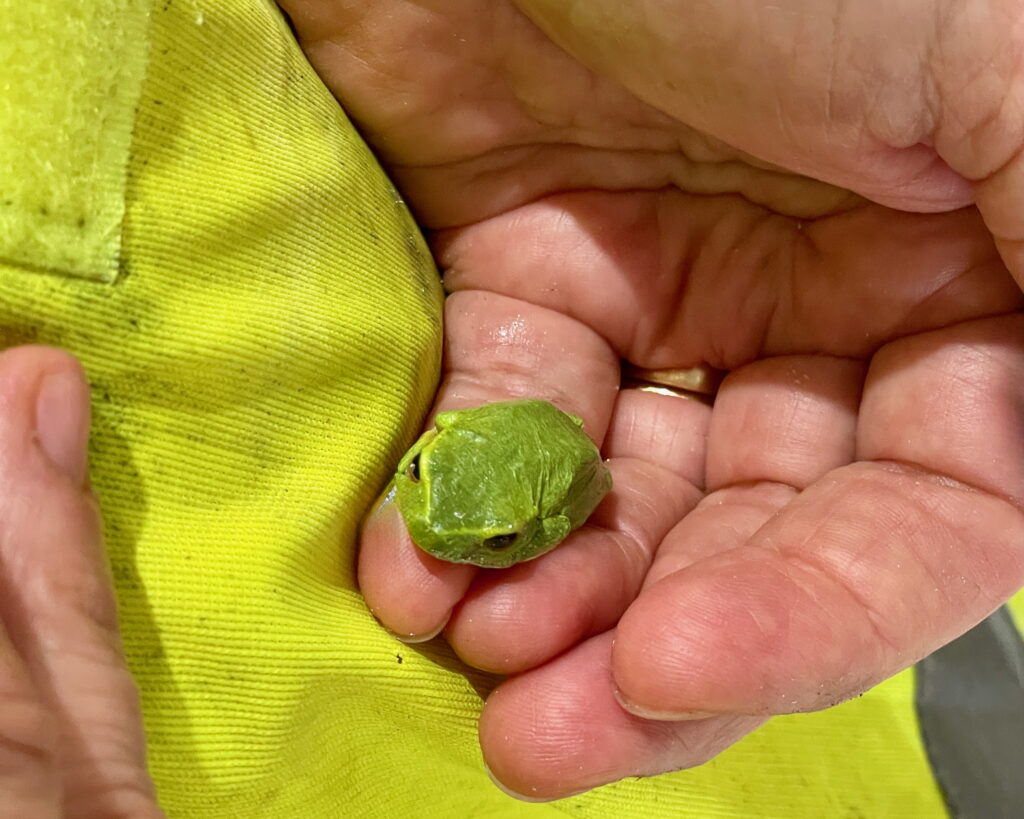
Perry and Taryn in for a routine boat build check with Oscar their boat builder from BME NQ, when they came across a little “intruder”. However, though little and a baby …. he knew the yard safety rules – always wear a high vis jacket!!
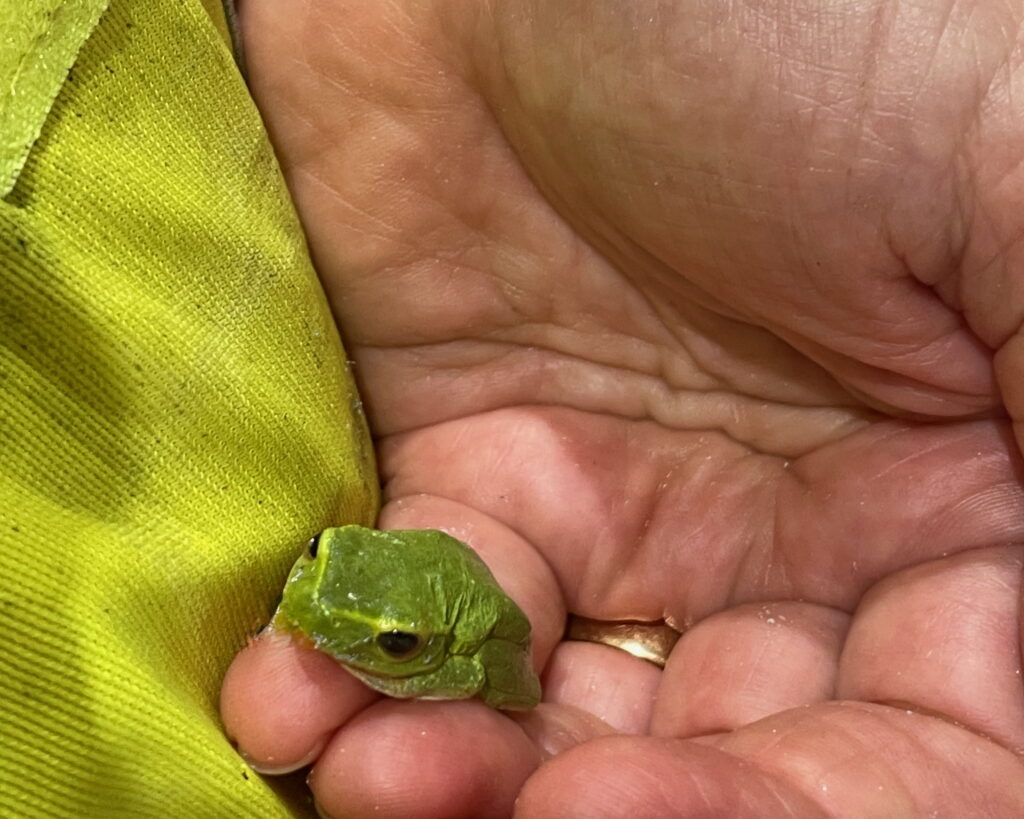
He/ She was of course an incredibly cute very young green tree frog!
Cairns and the surrounding Wet Tropics are home to many different frogs, BUT we have to say our absolute favourite is this well-known Australian green tree frog—scientifically named Litoria caerulea—and commonly found throughout northern and eastern Australia, including around homes, gardens, sheds, bathrooms and other human-made structures and apparently high on Aluminium boat structures!
It is one of Queensland’s most recognisable frogs, with smooth green skin, golden eyes and enlarged pads on the ends of its fingers and toes.
BUT …how did such a tiny frog climb so high on such a smooth surface?
Although the aluminium frame looked like an unlikely place for a tiny frog to reach, tree frogs are remarkable climbers.
Their fingers and toes have enlarged adhesive discs that help them grip leaves, branches and smooth or steep surfaces. These specialised toe pads allow them to climb vertically and move through vegetation (and aluminium!) in search of shelter, moisture and insects.
Our little visitor may have:
Tree frogs are primarily active at night. During the day, they commonly shelter in cool, dark or damp places such as tree hollows, crevices, drains, pipes and buildings.
So, while his location seemed quite extraordinary to us, it may simply have looked like a perfectly safe little frog hideaway to him.
Boatyards can also contain many attractive frog features: shaded spaces, water, vegetation, small crevices and lights that attract moths and other insects.
The little frog may therefore have been less lost than he first appeared.
A Little Visitor with a Big Sense of Adventure
As people who spend our lives around boats, the ocean and the Great Barrier Reef, we are continually reminded that nature is full of surprises.
Our tiny green visitor may have been only a few centimetres long, but he had already completed the extraordinary transformation from tadpole to froglet—and apparently developed some impressive climbing skills along the way.
Perhaps he was searching for shade. Perhaps he was following his next meal. Or perhaps, like many of our guests, he simply had a sense of adventure and a willingness to give it a go!!
Whatever brought him to the top of our aluminium boat frame, we were very pleased to meet him.
As welding was about to begin it had to be moved from there. Taryn washed her hands and wet the palm of her hand and fingers and gently nudged into her wet hand and placed the little frog just outside the yard in the green shaded bushes.
Frogs have extremely delicate, absorbent skin, so unnecessary handling is best avoided. However, where a frog faces an immediate hazard, gently moving it with clean, wet hands—or preferably clean, powder-free gloves—can help protect its skin while getting it safely out of danger!